
How Much Does a Vet X-Ray Cost in 2026?

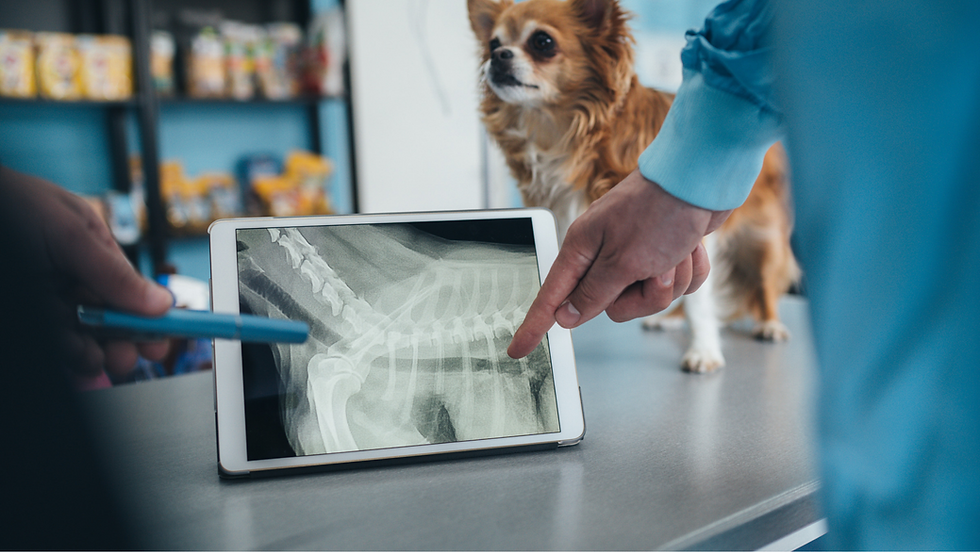
If your veterinarian recommends an X-ray, one of the first questions you may have is: How much is this going to cost? In 2026, veterinary X-rays can cost anywhere from around $100 to several hundred dollars depending on how many images are needed, what part of your pet's body is being examined, whether sedation is required, and whether the X-rays are performed at a regular veterinary clinic, emergency hospital or specialty center.
Current U.S. pricing data puts the average dog X-ray at about $213, with a typical range of approximately $169 to $388. A standard two-view study at a general veterinary clinic commonly falls around $150 to $400, while emergency imaging can cost considerably more.
The biggest thing to understand is that an “X-ray” isn't always one image or one standardized service. One clinic might quote you for a single view, another might include two or three views, and another might include specialist interpretation. Before comparing prices, you need to know what you're actually getting for your money.
How Much Does a Vet X-Ray Cost?
For a standard X-ray series at a general veterinary clinic, $150 to $400 is a reasonable U.S. planning range in 2026. More complicated studies, additional views, sedation, emergency care or specialist interpretation can push the cost higher. Current published pricing puts a two-view general-practice study around $150 to $400, with approximately $225 as a midpoint.
X-Ray Service | General Planning Range |
First or single X-ray view | $100–$250 |
Two-view X-ray study | $150–$400 |
Additional views | $50–$125 each |
Emergency X-ray study | $250–$600+ |
Sedation, if required | $75–$200+ |
Radiologist interpretation | $50–$150+ |
These are general U.S. planning ranges, not guaranteed prices. Your actual cost can vary based on your location, clinic, pet, number of views and medical situation.
One X-Ray vs. Multiple Views: What's the Difference?
One of the easiest ways to misunderstand an X-ray quote is to assume that every clinic is quoting the same number of images. Veterinarians commonly need images from multiple angles because bones, organs and other structures can overlap when viewed from only one direction. Many diagnostic studies therefore involve at least two views, while chest, abdominal or more complicated studies may require additional images.
For example, Clinic A might quote $150 while Clinic B quotes $300. Clinic A initially looks half as expensive, but what if the $150 price covers one view while the $300 price includes three? Those aren't equivalent services. When you're given an X-ray estimate, one of the most useful questions you can ask is: “How many views are included in this price?”
Why Does My Pet Need More Than One X-Ray?
Think of an X-ray as a two-dimensional photograph of a three-dimensional part of your pet's body. One angle may not show everything the veterinarian needs to see. Taking another image from a different position can reveal structures that were hidden or overlapping in the first image.
That's why a dog with a suspected fracture might need images from more than one angle, and why chest or abdominal studies frequently involve multiple views. Paying for several images doesn't necessarily mean you're paying for the same test repeatedly. Each view can provide different diagnostic information.
How Much Does a Dog X-Ray Cost?
For dogs, current 2026 data from CareCredit puts the national average at approximately $213, with typical prices ranging from $169 to $388. The number of images required, location and whether sedation is needed can all affect the final price.
Dogs may need X-rays for many reasons, including suspected broken bones, joint problems, swallowed objects, chest concerns or abdominal problems. A straightforward X-ray of a cooperative dog may fall toward the lower end of the range, while a multi-view study involving sedation can cost considerably more.
The size of the dog can matter as well, particularly when sedation is required. But don't assume that a larger dog will automatically have a dramatically more expensive X-ray. The number of views, clinic type and medical situation are often more important.
How Much Does a Cat X-Ray Cost?
Cat X-ray costs generally fall within a similar broad range. The final price depends more on what is being examined, how many images are required and whether the cat needs sedation than simply on the fact that the patient is a cat.
A calm cat having a straightforward X-ray may not require sedation. A frightened, painful or highly stressed cat may need additional medication so the veterinary team can safely position the cat and obtain useful images.
This is why it isn't always accurate to assume that a cat X-ray should cost less simply because a cat is smaller than most dogs.
Does My Dog or Cat Need Sedation for an X-Ray?
Not necessarily. Many pets can have X-rays taken without sedation, particularly when they're comfortable, cooperative and don't require difficult positioning. Other pets may need sedation because they're anxious, painful or need to remain extremely still in a specific position.
Sedation is particularly relevant for some orthopedic studies where precise positioning is important. Current 2026 pricing sources commonly put sedation associated with X-rays around $75 to $200, although the actual cost can vary based on the pet, medications and clinic.
If you receive an X-ray estimate, ask: “Is sedation included in this price, and is my pet likely to need it?” That one question can explain a significant difference between two quotes.
Why Does Sedation Increase the Price?
Sedation isn't simply an arbitrary add-on to the X-ray. It involves medication, veterinary staff time and monitoring while your pet is sedated. The medications and level of monitoring required can vary depending on your pet's size, age, health and the type of imaging being performed.
In some situations, additional evaluation may also be recommended before sedation. This is why a $200 X-ray estimate can become significantly more expensive when sedation and other related services are added.
Regular Vet vs. Emergency Vet X-Ray Costs
Where your pet gets the X-ray can make a major difference. Current 2026 pricing data puts a standard two-view X-ray at a general veterinary clinic around $150 to $400, while the same type of imaging at an emergency clinic may fall around $250 to $600.
Emergency hospitals operate differently from regular clinics. They need staff, equipment and medical resources available for urgent cases, often 24 hours a day. The X-ray may also be only one part of a much larger emergency workup.
For example, if your dog swallowed an object, the bill might include the emergency examination, X-rays, bloodwork, medication and potentially additional imaging or treatment. So a $300 X-ray doesn't necessarily mean you're going home with a $300 bill.
The X-Ray Price Isn't Always the Total Visit Price
This is one of the most important things to remember when budgeting. The X-ray may only represent one line on your veterinary invoice.
Suppose your pet's X-rays cost $250. You might also be charged for the veterinary examination, sedation, additional X-ray views, specialist interpretation, medications or other diagnostics. If the X-ray identifies a problem, your veterinarian may then recommend treatment or additional testing.
Instead of asking only “How much are the X-rays?”, also ask “What is the estimated total cost of today's visit?”
That gives you a much more useful number for budgeting.
What Is a Veterinary Radiologist?
Another charge you may see on an X-ray estimate is radiologist interpretation or radiology consultation. Your regular veterinarian is trained to evaluate X-rays, but certain images may also be sent to a veterinary radiologist for additional review.
A veterinary radiologist is a veterinarian with specialized training in diagnostic imaging. The radiologist reviews the images and provides a report that can help the veterinarian managing your pet's care.
Not every X-ray requires a separate specialist interpretation, and some clinics include interpretation in their imaging price. Other clinics charge for it separately.
How Much Does a Veterinary Radiologist Interpretation Cost?
Published 2026 consumer pricing estimates commonly place a separately billed radiologist interpretation around $50 to $150, although pricing varies. Teleradiology provider pricing can be higher, particularly for urgent or STAT interpretations, so what the clinic pays or bills may depend on the provider and turnaround time.
Imagine Clinic A charges $225 for X-rays while Clinic B charges $325. Clinic A appears $100 cheaper. But if Clinic A adds a separate $100 radiologist interpretation while Clinic B includes specialist review in its price, the difference largely disappears.
That's why you should ask: “Does this price include interpretation, and will the images be reviewed by a radiologist?”
Why Can an X-Ray Cost $150 at One Vet and $500 at Another?
There are several possible explanations. The $150 price might represent a straightforward study at a general veterinary clinic without sedation. The $500 quote could include multiple views, sedation, emergency-hospital pricing and specialist interpretation.
Both pet parents might later say, “My dog had X-rays.” But financially and medically, they may have received very different services.
This is why comparing the headline price alone can be misleading.
What Are You Actually Getting for Your Money?
Imagine Clinic A quotes $195 for two X-ray views interpreted by the veterinarian. Clinic B quotes $375 for three views, sedation and a specialist radiologist report. Clinic A looks much cheaper, but these aren't equivalent services.
Now imagine both clinics are providing two views, neither requires sedation and both include comparable interpretation. If one charges $195 and the other charges $375, that difference becomes much more useful information.
That's what veterinary price transparency should help pet parents understand. It's not simply “Which number is lower?” It's “What am I actually getting for that price?”
What Else Could Appear on My X-Ray Bill?
Depending on why your pet needs imaging, the X-ray may only be one component of the visit. You could also see charges for the examination, emergency consultation, sedation, bloodwork, medications, injections, radiologist interpretation, ultrasound or other diagnostics.
The next step also depends on what the X-rays reveal. If imaging identifies a fracture, foreign object or another medical concern, your veterinarian may recommend additional diagnostics or treatment. The cost of finding the problem and the cost of treating the problem are two different expenses.
Questions to Ask Before Your Pet Gets X-Rays
Before your pet's X-rays are performed, ask how many views are included, what area is being imaged, whether sedation is likely to be necessary, whether sedation is included in the quote, who will interpret the images, whether a radiologist review costs extra, and what the estimated total visit will be.
You don't need to understand veterinary radiology to understand what you're paying for. A few questions can make a $200, $300 or $500 estimate considerably easier to understand.
Compare Vet X-Ray Costs Before Your Visit
Veterinary X-ray prices can be confusing because clinics don't necessarily package imaging the same way. One price might represent only the X-rays themselves, while another could include multiple views, sedation or interpretation.
That's why FareVet focuses on giving pet parents more context around veterinary costs. Knowing the price is useful, but understanding what's included in that price is even more useful.
Use FareVet to research available veterinary cost information in your area and get a better idea of what you may need to budget before your appointment.
Compare Vet X-Ray Costs Near You on FareVet
So, How Much Should You Budget for a Vet X-Ray in 2026?
For a standard X-ray series at a regular veterinary clinic in the United States, approximately $150 to $400 is a reasonable general planning range in 2026, while current CareCredit data puts the average dog X-ray at about $213. Additional views, sedation, emergency care and specialist interpretation can push the total higher.
The biggest mistake is comparing two X-ray prices without understanding what they include. Before deciding that one clinic is expensive or another is inexpensive, find out how many views you're getting, whether sedation is included, whether specialist interpretation is included and whether the number you're looking at represents the X-ray itself or the expected total visit.
Because a $175 X-ray and a $400 X-ray may not actually be the same service.
When comparing veterinary X-ray prices, the most useful question isn't only “How much does it cost?”
It's “What am I getting for that price?”


Comments